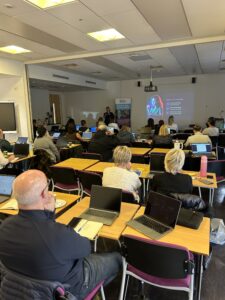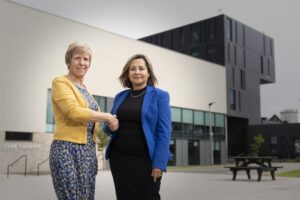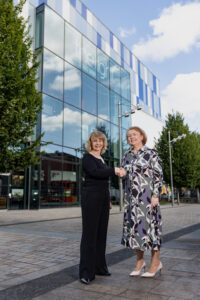
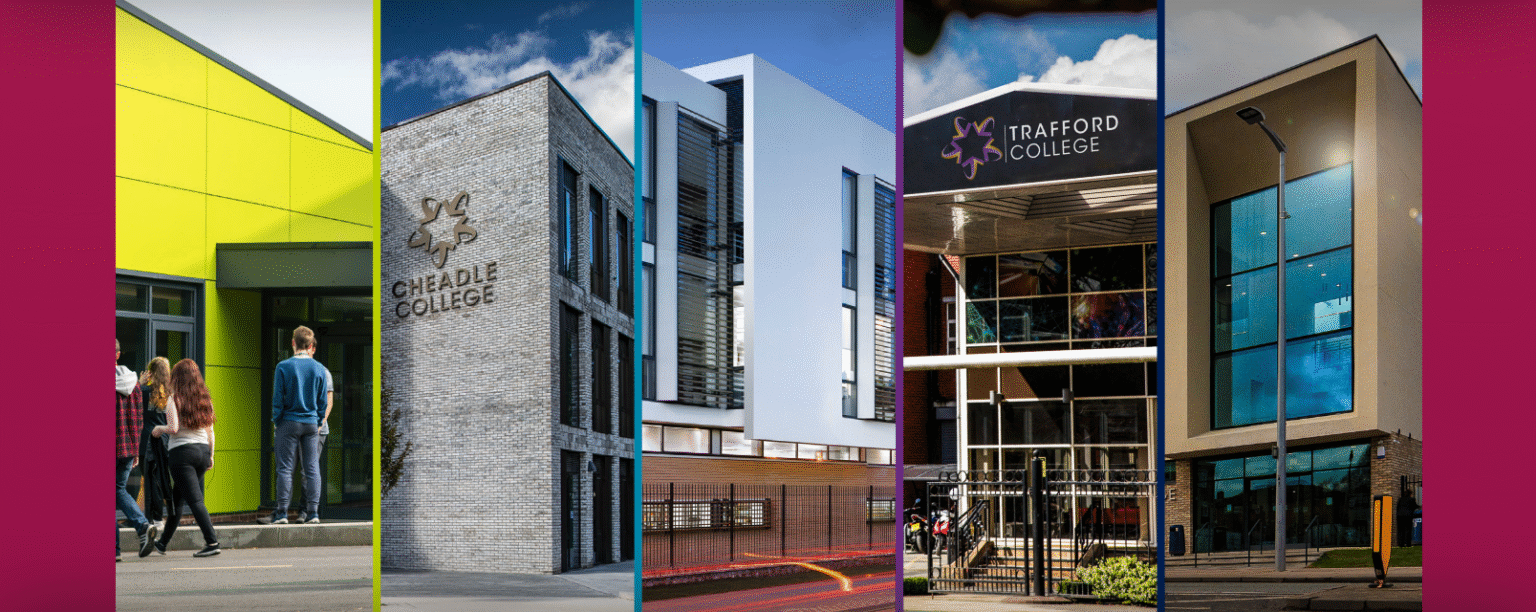








TSCG Group College facades

Annual Report 2025

Delivering the Vision

The TSCG Strategic Plan 2024–30 Annual Report (Year 1, FY25) outlines the first year’s progress against six strategic priorities for the College Group. The plan is designed to be flexible and responsive to a changing sector, with a vision to lead in education and skills for the city region.

About Us

Colleagues

Over

900

Colleagues

Adults

Over

6000

Adults

Apprenticeship

1500

Apprentices

Young People

6000

Young Adults

Graduate

Over

400

University Centre Students

Earnings

Annual Income Over

£60m

Our Big 6 Strategic Priorities

To read our 6 strategic objectives please see our 2024 – 30 Strategic Plan

Strategic Priorities and Progress

Strategic Priority 1

Providing a curriculum that delivers the skills our economy needs – locally, regionally and nationally.

In Year 1, TSCG made strong progress toward aligning its curriculum with regional economic priorities. While some targets were impacted by national factors, the College Group saw growth in key areas including apprenticeships, adult education, and employer engagement, supported by new initiatives like the Airport Skills Hub and strategic partnerships.

Highlights Include…

  • Growth in T Level learners.
  • Adult level 3 recruitment significantly above target.
  • Apprenticeship recruitment above previous year.
  • New airport skills hub and advisory board launched.
  • FE innovation programme: 150 SMES engaged.

Strategic Priority 1 – Progress in Action

FEIF Statistics

  • 4000+ young people & jobseekers engaged through the Airport Academy
  • 20 care leavers gained skills through Construction Cares with GMI Construction & Trafford Council
  • 2000 residents into work via Airport Academy with Manchester Airport Group
  • 100+ businesses supported through FE Innovation Project

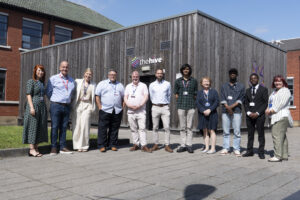
Launch of the HIVE in partnership with SHARP


Strategic Priority 2

Positioning TSCG as the employer of choice for the further education workforce. TSCG is committed to creating a supportive, rewarding workplace. In Year 1, we completed a major leadership transformation, improved staff wellbeing and satisfaction, and launched the new TSCG Deal for Colleagues. With reduced turnover and stronger professional development, we’ve met all staff-related targets, laying the foundation for a thriving organisational culture.

Highlights Include…

  • Leadership and management transformation completed.
  • Staff satisfaction and wellbeing improved; competitive salaries.
  • Staff turnover reduced; improved induction and professional development in progress.
  • Impact: all staff-related targets achieved.
  • New TSCG deal for colleagues launched.

Strategic Priority 2 – Progress in Action

Case study: from industry to education James Hollingworth made the transition from working hands-on in industry to shaping future talent in the classroom at Stockport College. Starting as a technician, he was supported through professional development and training to become a Lecturer in Construction and Sustainability, demonstrating TSCG’s commitment to nurturing internal talent and bridging industry expertise with education. “I found it very easy to transition from site, into teaching, due to the support that the college put in place for me. I came through the doors working here as a Technician and undertook a 0.5 role where I was teaching whilst I was studying for my Level 5 Diploma. The college fully supported me and helped me progress on my journey into teaching.”

Strategic Priority 3

Delivering an exceptional student experience.

Year 1 saw meaningful gains in student outcomes across TSCG. Key performance indicators for 16–19 learners, apprenticeships, and destinations improved, student attendance continued to rise in comparison to recent years. The Belong Project helped reduce exclusions, and new strategies for SEND and vulnerable learners enhanced support. Enrichment and political literacy initiatives expanded, contributing to a more inclusive and engaging student experience.

Highlights Include…

  • Send and vulnerable learners strategy launched; alternative provision established.
  • Belong project reduced suspensions/exclusions.
  • Political literacy and enrichment opportunities expanded.
  • Impact: most student outcomes and feedback measures achieved.
  • Improved KPIs for 16–19, apprenticeships, and positive destinations.
  •  

Strategic Priority 3 – Progress in Action

Developing Citizens of the Future

  • Over 55% of eligible students are already registered to vote.
  • First UK FE College to introduce automatic student voter registration.
  • Regular MP clinics give students face-to-face access to their Parliamentary representative.
  • Moodbox Monday empowers students to vote weekly on local and national issues.
  • Political literacy embedded in the curriculum. Empowering students for the 2029 voting age change.
  • 3000+ of our students are engaged in enrichment activities. Including workshops, community projects & industry experience.

Strategic Priority 4

Ensuring financial stability and sustainability.

TSCG delivered a strong financial performance in Year 1, meeting all key targets for income, EBITDA, and financial health. With a refreshed marketing strategy, a robust capital investment plan, and improved procurement practices, the College Group remains well-positioned for sustainable growth and long-term resilience.

Highlights Include…

  • Staff and capital investment plans in place.
  • New marketing strategy and improved events calendar.
  • Procurement strategy updated for compliance and value for money.
  • Impact: all financial targets achieved.
  • Income, EBITDA, and financial health targets achieved.

New £27m building opened in September 2025

Strategic Priority 4 – Progress in Action

Funding Snapshot

£7.5m

Adults

Adults
Apprenticeship

£3.2m

Apprentices

Colleagues

£3m

High Needs Funding

£41.7m

16-19 Year Olds

Young People
Earnings

£2m

Commercial

Graduate

£2.6m

Higher Education

Total £60m

Strategic Priority 5

Driving innovation in technology, facilities and skills delivery.

TSCG made solid progress in modernising its digital and physical infrastructure. A digital entitlement is now in place, with AI integration underway and a new Chief Technology Officer leading the development of a group-wide DDaT strategy. Estates improvements, including the Cheadle redevelopment, are advancing, and satisfaction with resources has risen among staff and students, marking a strong foundation for future innovation.

Highlights Include…

  • Estates strategy launched; Cheadle redevelopment on track.
  • New chief technology officer appointed; DDAT strategy in development.
  • Investment in immersive technology spaces.
  • Staff and student satisfaction with resources improved.
  • Impact: most targets achieved; some estate improvements pending.
  • Digital entitlement in place, AI plan in development; AI tools in place for teaching staff.
  •  

Strategic Priority 5 – Progress in Action

Case study: Innovation Hub employer feedback

Employers across the region are increasingly using TSCG’s Innovation Hub to host events, deliver training, and collaborate in immersive, tech-enabled spaces. These facilities offer a dynamic environment for community engagement, strengthening local partnerships and supporting workforce development.

“We used the incredible immersive space at TSCG, near our wonderful Art Gallery. What a superb addition to our creative and driven town.”

-Stockport Library

Strategic Priority 6

Providing civic leadership to positively influence our communities.

TSCG continues to strengthen its role as a civic leader in the region. In Year 1, the College Group deepened partnerships with over 70 organisations, expanded community learning, and advanced its sustainability agenda, achieving ISO 14001 certification and signing the “Race to Zero” pledge. With EDI embedded in its culture and inclusive governance in place, TSCG is driving meaningful social value and long-term impact across its communities.

Highlights Include…

  • ISO 14001 certification achieved across all sites.
  • Governance self-assessed as good; board diversity supports inclusion.
  • Community learning activity increased; £1m funding value.
  • Social value calculated at £1.1m.
  • CO2 emissions reduced; “race to zero” initiative signed.
  • Impact: most EDIB and sustainability targets achieved.
  • Community partnership model strengthened (70+ partners).
  • EDI embedded in culture; 94% staff agreement.
  •  

Strategic Priority 5 – Progress in Action

Case study: AGE UK Stockport partnership

Every month, our campuses open their doors to Age UK Stockport members for Welcome Wednesdays. Our students offer hair and beauty treatments, digital literacy support, plumbing demonstrations, and energy-saving advice.

During Digital Drop-In sessions, student volunteers support Age UK Stockport members to use digital devices safely and effectively.

Beyond just partnering with the College, Age UK Stockport met The Light Cinema at a Community Partnerships event and are now working together to put on dementia screenings and even dementia discos for the local community.

This was one of the first Community Partnerships projects – running since 2018 – and is a brilliant example of communities getting together to share learning, advice and skills. It’s also just really good fun!

Elderly ladies sat at a table talking to a student

"From a meeting back in 2018, I had a conversation about older and younger generations working together to form a wonderful partnership of intergenerational work. Over the years this has evolved and numbers have grown, and this has been such an inspirational project, older and younger ages working well together and sharing experiences.

We are so proud to be involved in working with the Trafford & Stockport College Group and the great relationship we have with them, and we look forward to further ideas/ projects for the future."

- Hazel Batty - Senior Lead for Communities and Hospital discharge services Age UK Stockport

Strategic_Plan_Stockport_17

Read Our Full Annual Report Here

We’ve provided an accessible version of this document in Word format to support screen readers and other assistive technologies. If you need this document in another format, please contact us.